How Bergen’s traditional youth brigades went from being criticised to becoming an essential part of the city’s 17 May celebrations.
From controversy to tradition: the buekorps and 17 May in Bergen
This is the story of how Bergen’s buekorps, traditional uniformed youth brigades with drummers, went from being disliked to becoming an essential part of the city’s 17 May celebrations.
When the buekorps divided the city
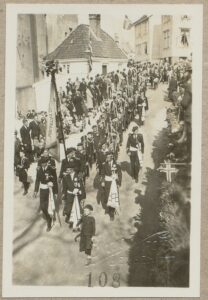
At the beginning of the twentieth century, the relationship between Bergen’s residents and its buekorps was more troubled than we often imagine today. Although they had already been part of city life for over fifty years, many people questioned their place in the celebrations.
Newspapers often described them unflatteringly. They lacked flags; some thought their officers looked like carnival figures with sashes, epaulettes, medals and ribbons. Their military appearance was considered unsuitable for a children’s parade. At times, criticism was so strong that people wanted them excluded from the processions.
The drum ban that shook the brigades
In 1909, the police allowed no more than two drums per brigade in the parade. Several brigades boycotted the event, and the debate intensified. Public opinion remained divided: many were irritated when the brigades appeared, yet missed them when they stayed away. Even before 1916, the buekorps were an established and emotionally charged part of Bergen’s identity, without consistent public support.
The turning point
The year 1916 marked an important change. After the great city fire, it was uncertain whether a children’s flag parade would be held. On 13 May, Kristian Bing proposed that it should be organised by the boys themselves, meaning the city’s buekorps. And so it was.
On 17 May 1916, the Saturday brigades led a flag parade that met the main procession at the Christie monument and continued through the fire-damaged city. Newspapers praised the event and highlighted the brigades’ organisation as an exemplary contribution. This probably did much to change public perceptions.
Many of the earlier annual newspaper attacks disappeared. The brigades gradually became recognised features of the celebrations rather than subjects of conflict.
From unwelcome to indispensable
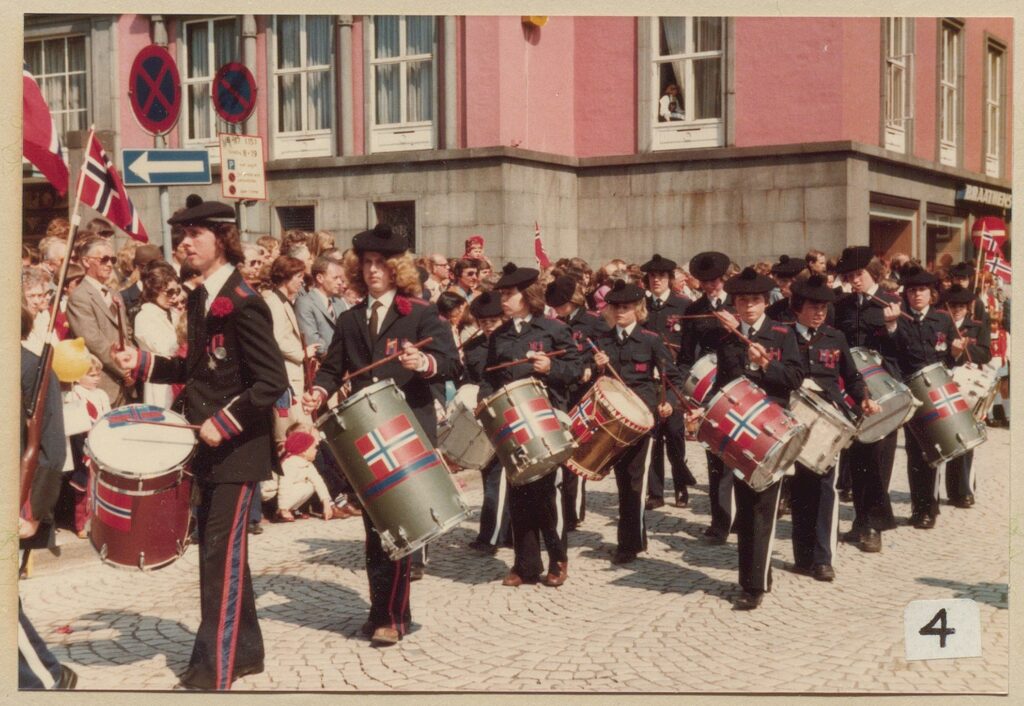
During the 1920s, newspapers adopted a notably positive tone. Where they had once criticised missing flags and excessive drumming, they now praised smart uniforms, disciplined marching and the pride inspired in parents and spectators. The buekorps were seen as adding variety and life to the children’s flag parade.
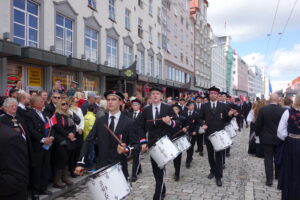
From their controversial position at the start of the century, the brigades gained considerable standing after 1916. During the interwar years, they were increasingly recognised as a positive, traditional contribution. Today, they are a natural part of Flaggtoget and a distinctly Bergen tradition we are proud of. Who could imagine 17 May without the loveliest sound of spring: buekorps drums echoing through Bergen’s streets?