Bjørnson in Bergen: the politician, poet and theatre director.
Bjørnson in Bergen: politician, poet and theatre director
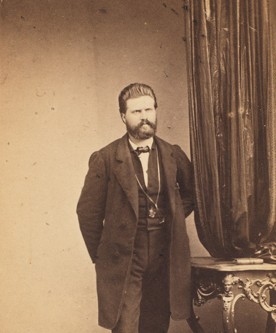
At just 25, Bjørnson was brought to Bergen by Ole Bull to become theatre director. His time in the city profoundly influenced him. He soon found himself opposing Bergen’s leading middle classes. In 1858, he also became editor of Bergensposten, and before the 1859 election he campaigned forcefully for candidates who wanted to resist Swedish political pressure. The people of Bergen were inspired, and every candidate he supported was elected to parliament.
17 May 1859 — an unprecedented celebration
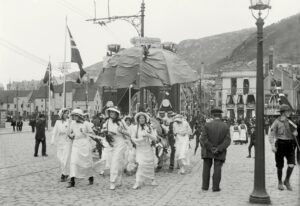
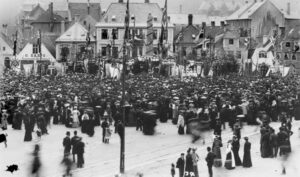
Bjørnson was also elected chairman of Bergen’s 17 May Committee. His ambitions were clear: the celebrations should teach people about the ideas behind the Constitution and give the city a magnificent festival. When the civic procession set off early in the morning, led by Ole Bull and Bjørnson, it gathered the largest crowd Bergen had ever seen. It passed through much of the city before ending at the platform at Engen.
A speech Bergen never forgot
There, Bjørnson delivered what was probably his first great public ceremonial speech. The text has been lost, but eyewitnesses described him standing “like a sun god”, his voice ringing out over a spellbound crowd. He spoke about the importance of celebrating the day and presented the Constitution as a symbol of freedom and independence. The response was overwhelming: handkerchiefs waved, women threw flowers and the cheering seemed endless.
Festivities, songs and disagreements
After the speech, the celebrations continued with concerts featuring the city’s choirs singing patriotic songs, including a newly written contribution by Bjørnson himself. The relationship between Bjørnson and Ole Bull that day later inspired myths and speculation, particularly over who organised the performances. Some sources claimed Bull refused to perform after Bjørnson received too much applause; others dismissed this as Bergen gossip.
Whatever the truth, Bull performed that evening to thunderous applause, and the day ended with fireworks from Fløyen.
Farewell to Bergen
When Bjørnson left Bergen in autumn 1859, he had lost his position as theatre director. Nevertheless, he left a lasting mark as a theatre leader, journalist, political campaigner and poet. Several important early works were published during his time in Bergen, including Arne. It was also here that he wrote the first draft of what would become Norway’s national anthem, “Ja, vi elsker”.